BRUTE FORCE
BRUTE FORCE
BRUTE FORCE
YEAR: 2025
YEAR: 2025
YEAR: 2025
TYPE: EXHIBIT DESIGN
TYPE: EXHIBIT DESIGN
TYPE: EXHIBIT DESIGN
WORK: GROUP
WORK: GROUP
WORK: GROUP
[INTRODUCTION]
[INTRODUCTION]
A museum exhibition proposal examining brutalism in postwar Berlin as a political tool. After 1945, East and West Berlin each used concrete and monumental scale to project legitimacy—the same architectural vocabulary put to work by opposing ideologies. The exhibition traces that tension through buildings, archival material, and physical artifacts, asking how a style with no inherent politics became one of the Cold War's most charged visual languages.
A museum exhibition proposal examining brutalism in postwar Berlin as a political tool. After 1945, East and West Berlin each used concrete and monumental scale to project legitimacy—the same architectural vocabulary put to work by opposing ideologies. The exhibition traces that tension through buildings, archival material, and physical artifacts, asking how a style with no inherent politics became one of the Cold War's most charged visual languages.
A museum exhibition proposal examining brutalism in postwar Berlin as a political tool. After 1945, East and West Berlin each used concrete and monumental scale to project legitimacy—the same architectural vocabulary put to work by opposing ideologies. The exhibition traces that tension through buildings, archival material, and physical artifacts, asking how a style with no inherent politics became one of the Cold War's most charged visual languages.
[IDENTITY]
[IDENTITY]
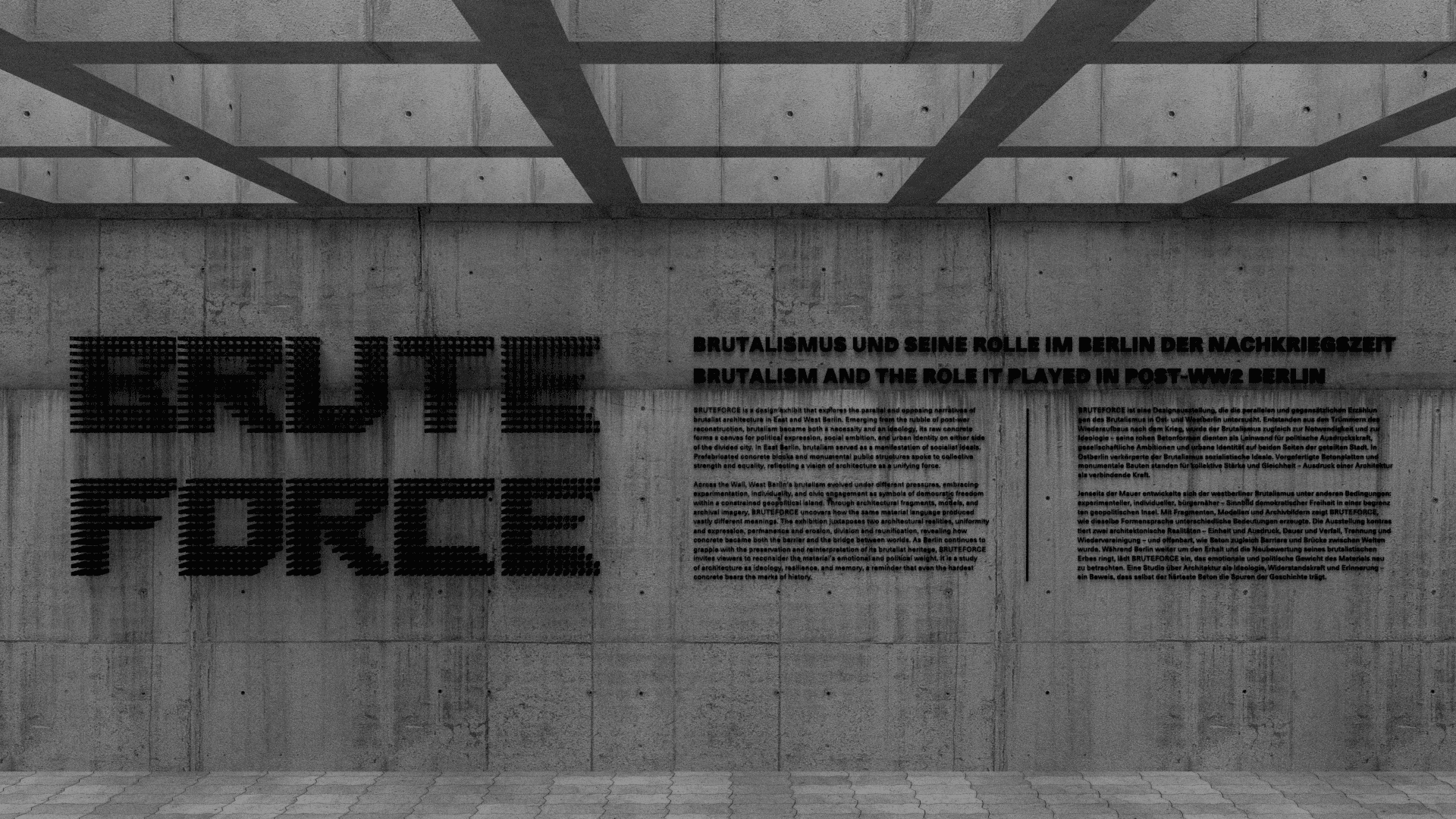
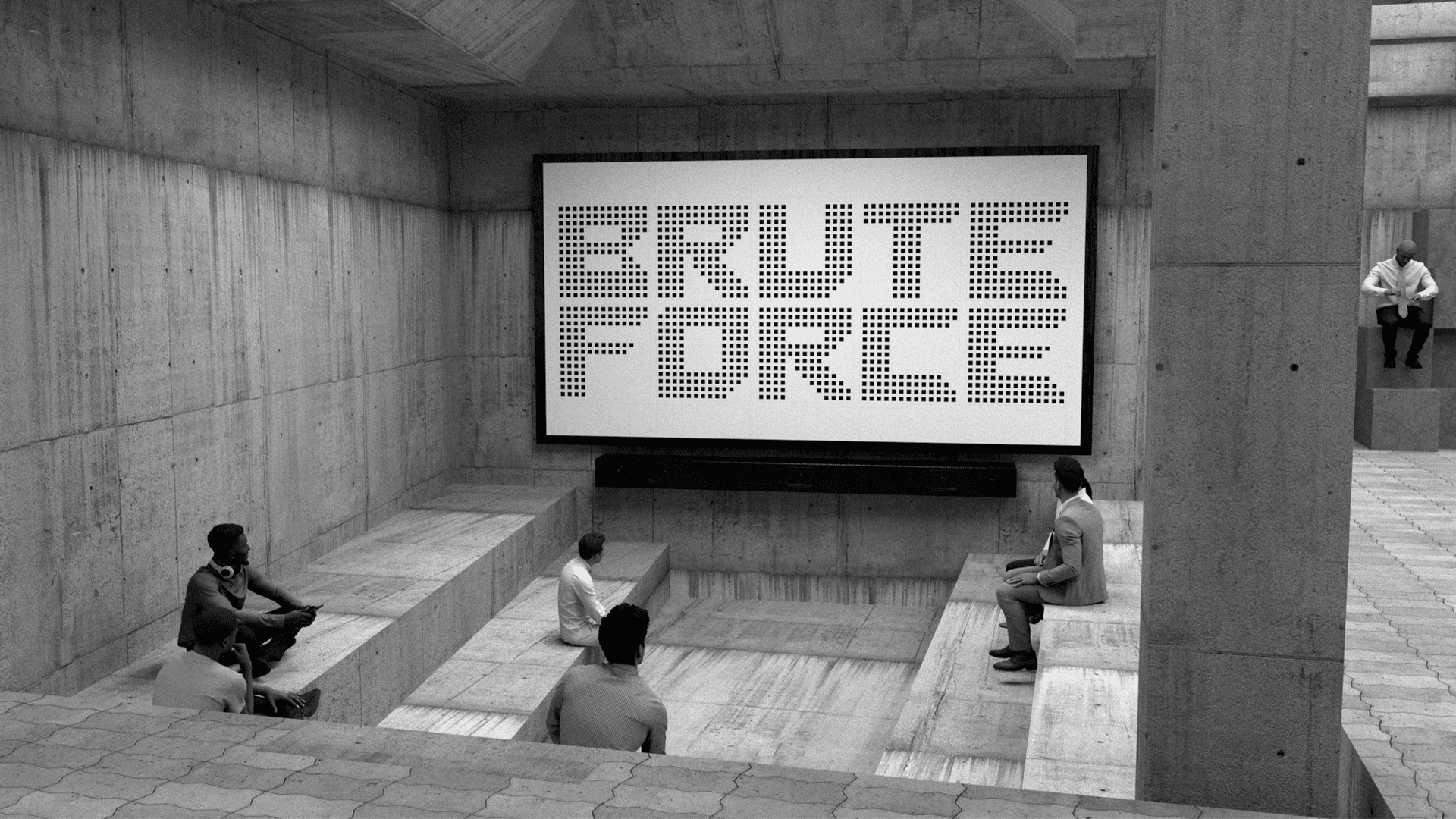
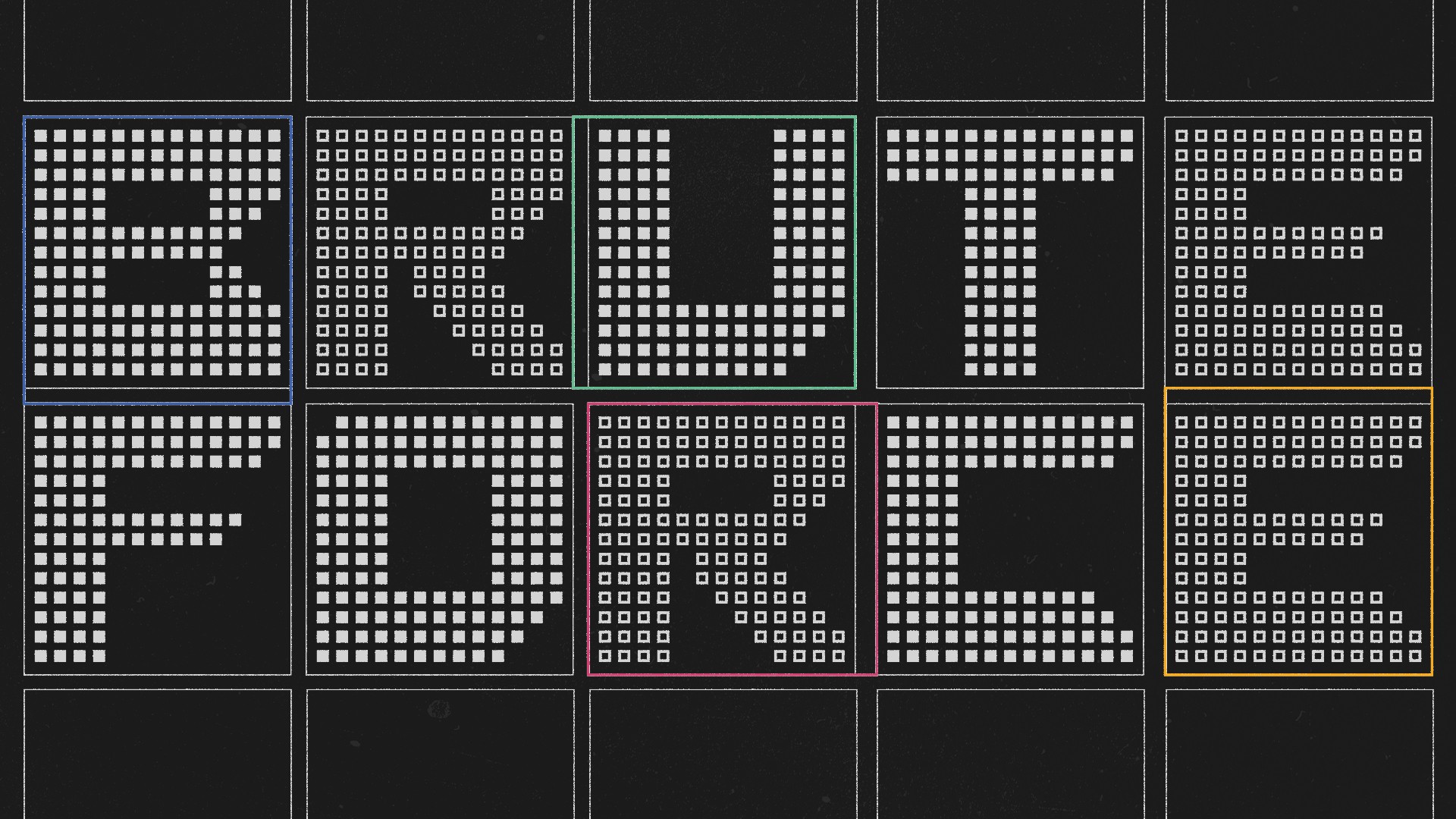
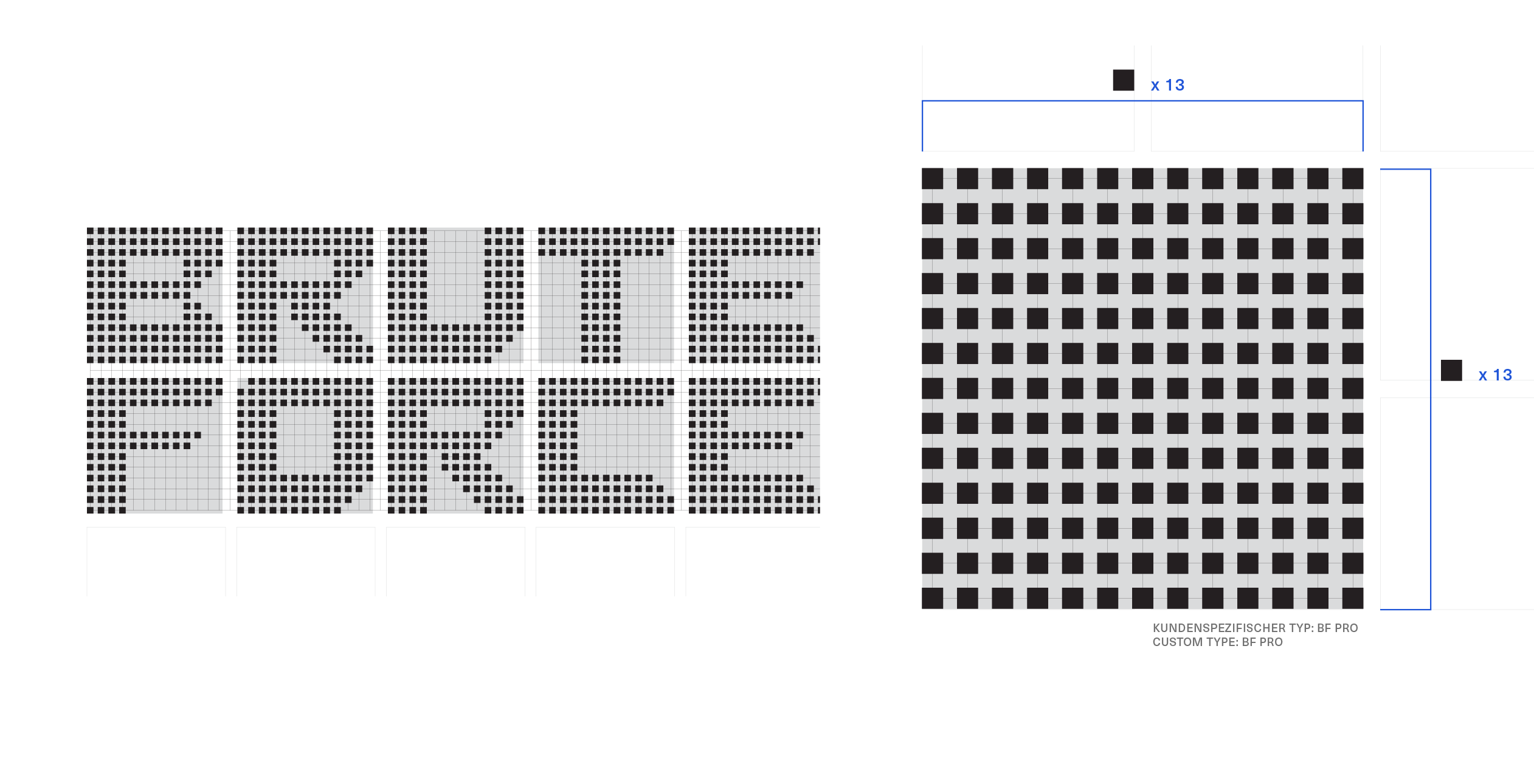
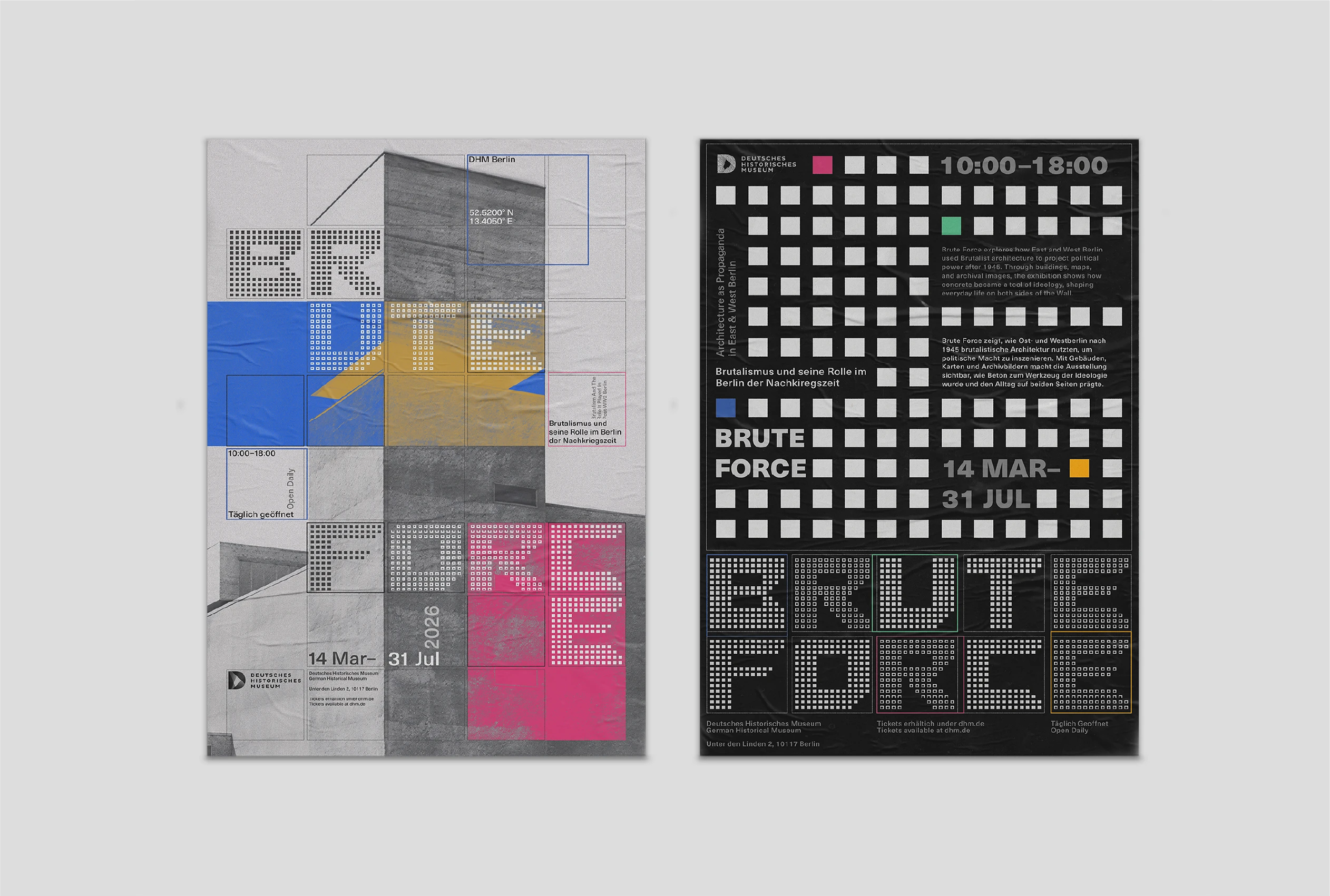
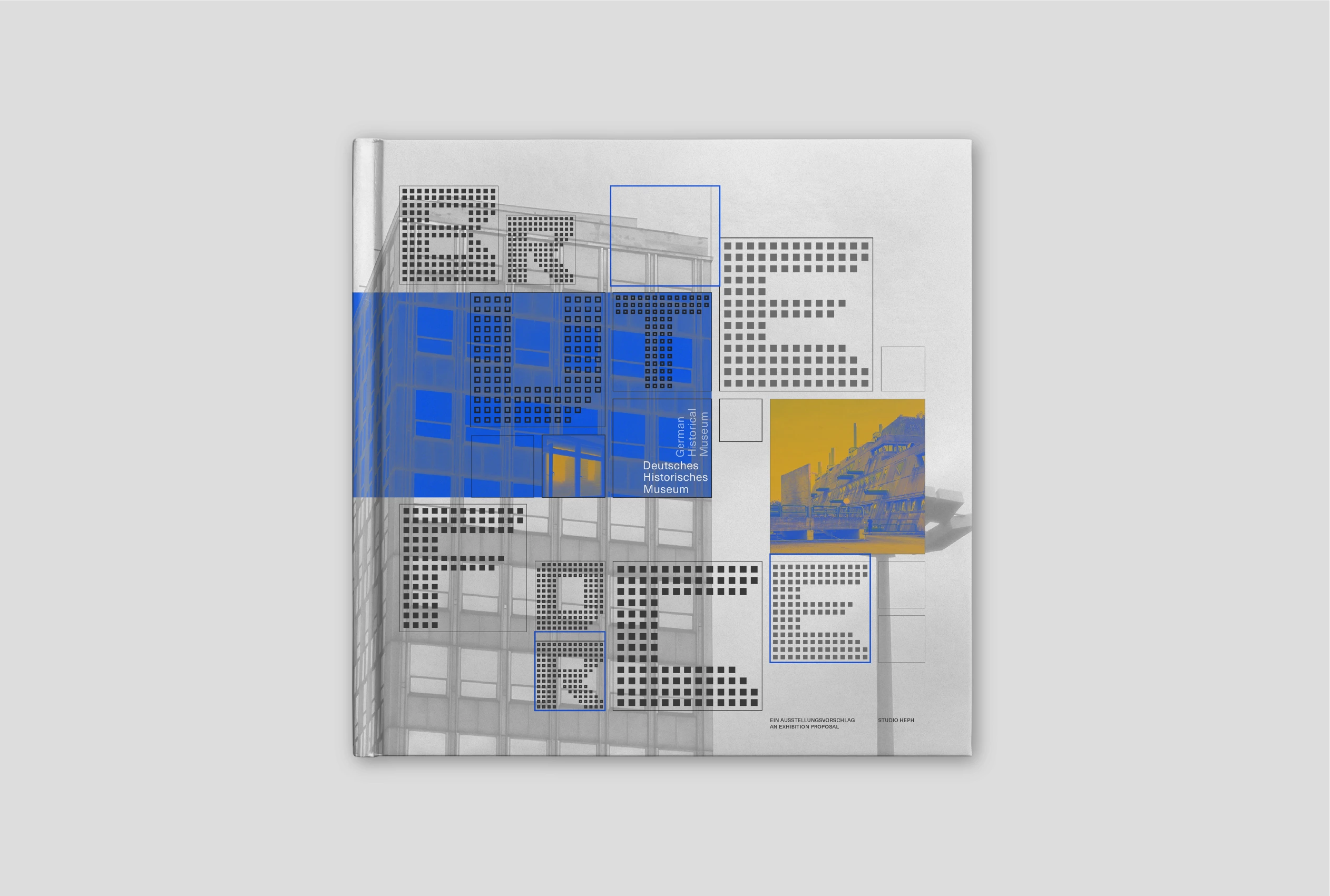
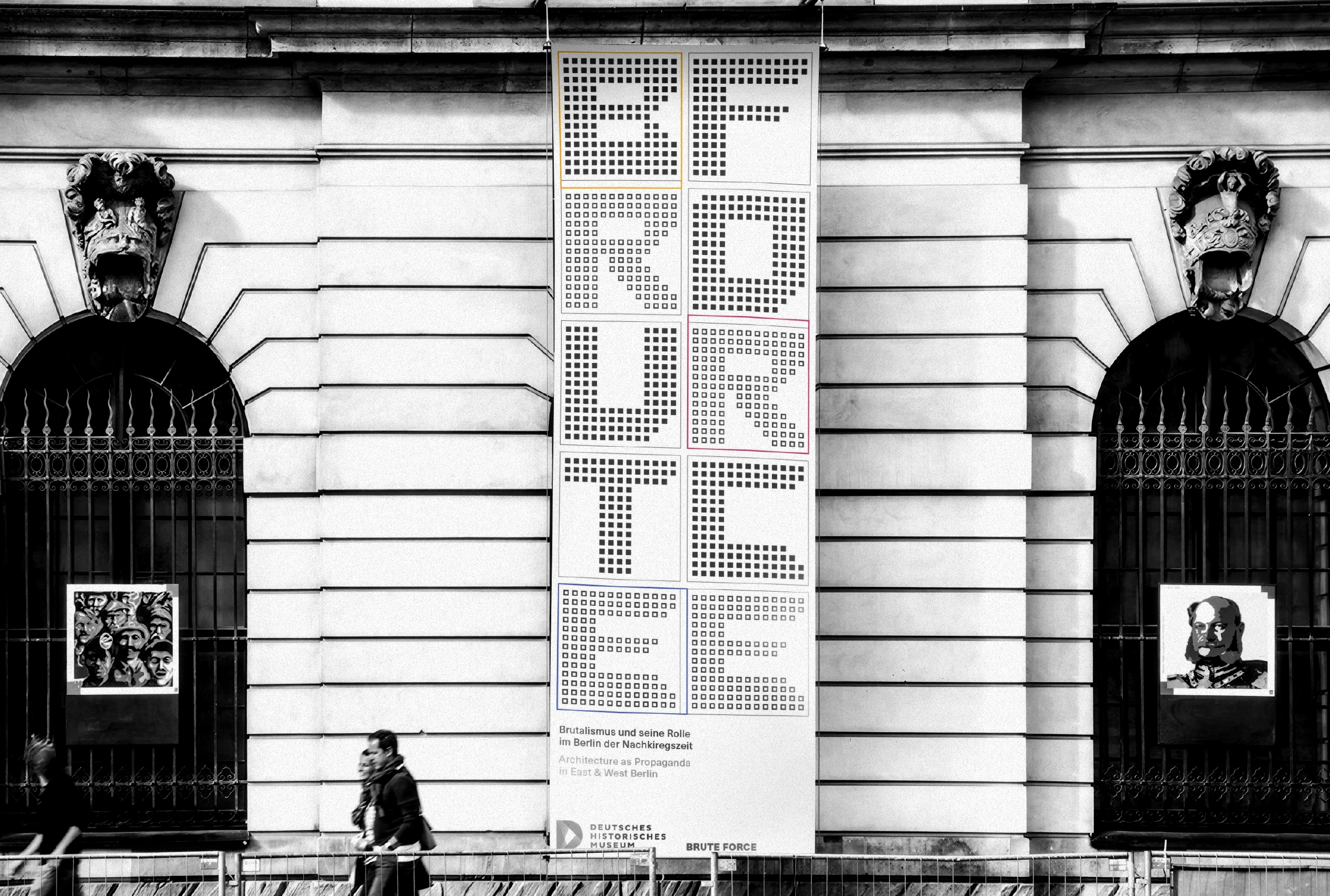
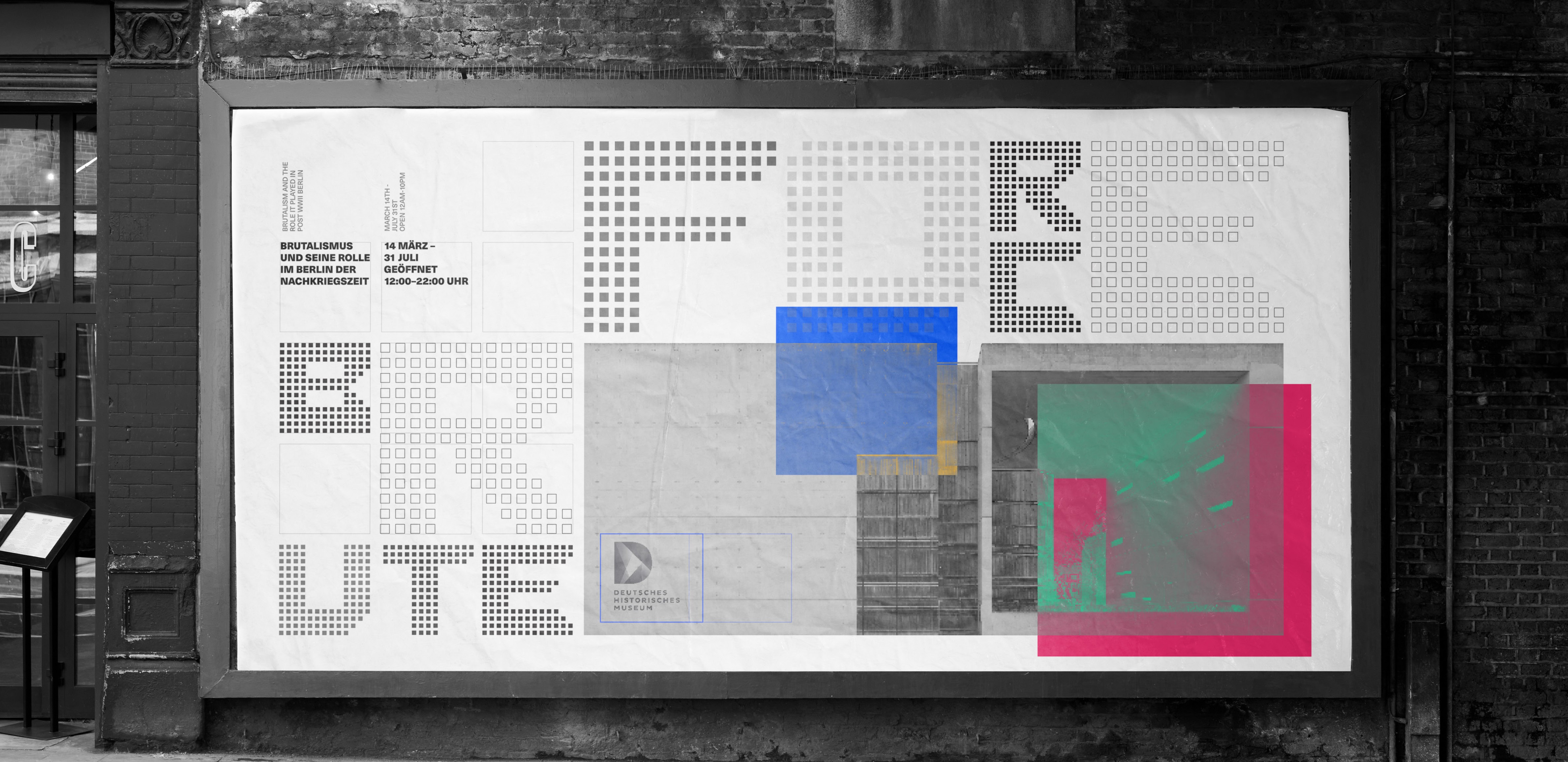
BF PRO is a custom typeface designed for the exhibition, built on a strict square grid where each letterform functions as a modular unit. The system is based on brutalist logic; variation within constraint, form defined by repetition and structure. All public-facing copy runs bilingual in English and German. The identity extends across posters, social media, tickets, and the exhibition book cover.
BF PRO is a custom typeface designed for the exhibition, built on a strict square grid where each letterform functions as a modular unit. The system is based on brutalist logic; variation within constraint, form defined by repetition and structure. All public-facing copy runs bilingual in English and German. The identity extends across posters, social media, tickets, and the exhibition book cover.
BF PRO is a custom typeface designed for the exhibition, built on a strict square grid where each letterform functions as a modular unit. The system is based on brutalist logic; variation within constraint, form defined by repetition and structure. All public-facing copy runs bilingual in English and German. The identity extends across posters, social media, tickets, and the exhibition book cover.
[THE SPACE]
[THE SPACE]
[THE SPACE]
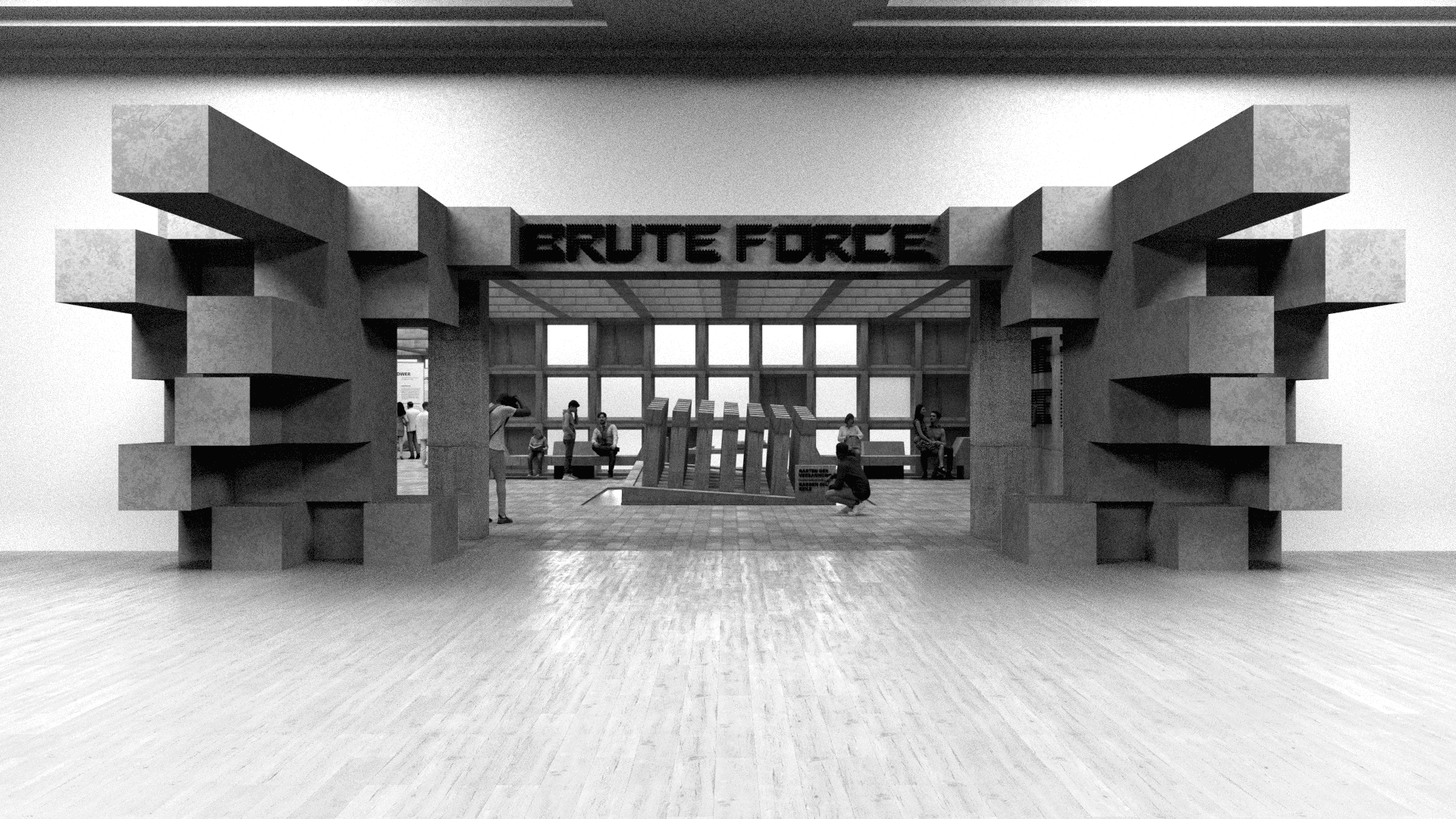
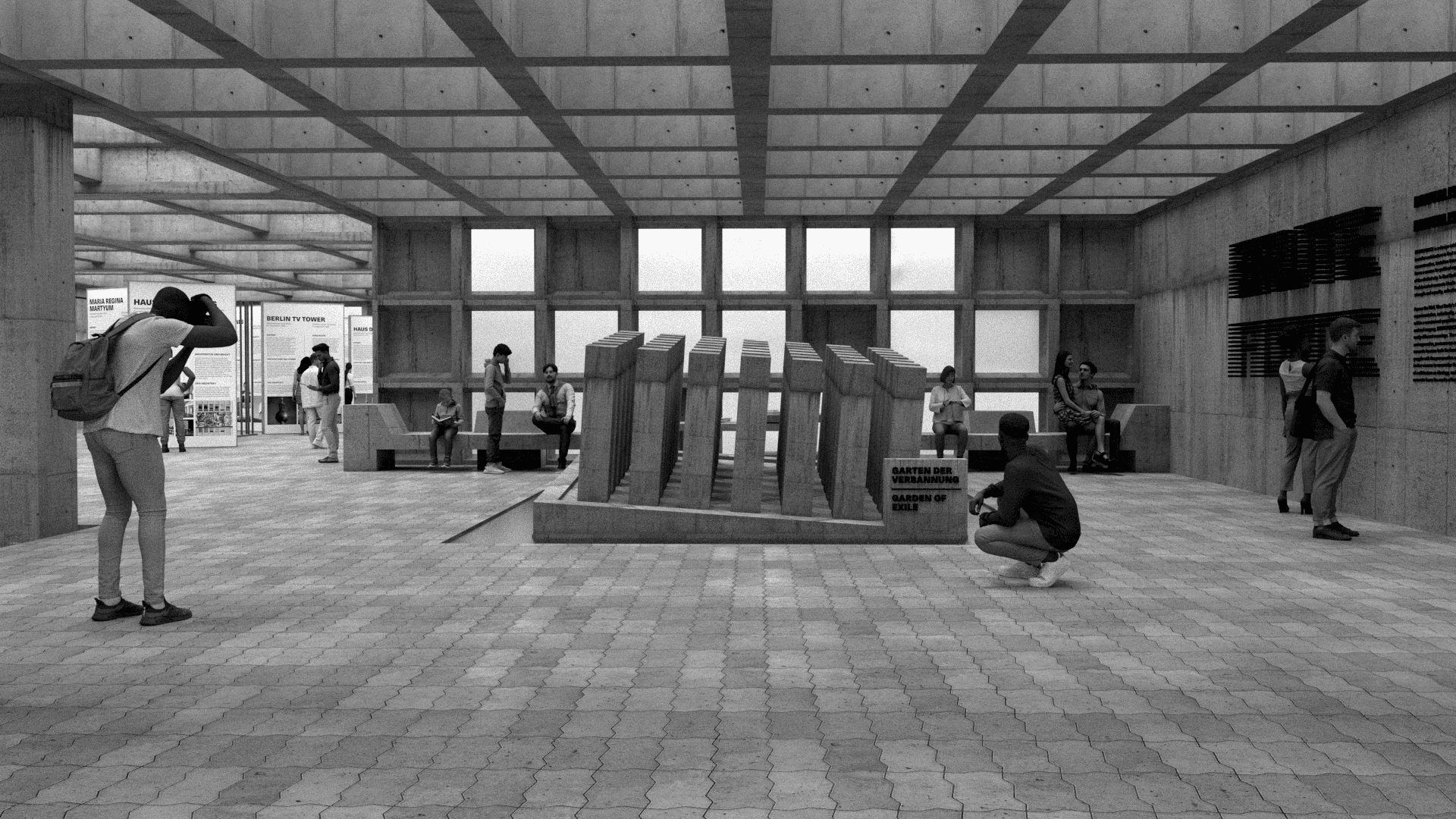
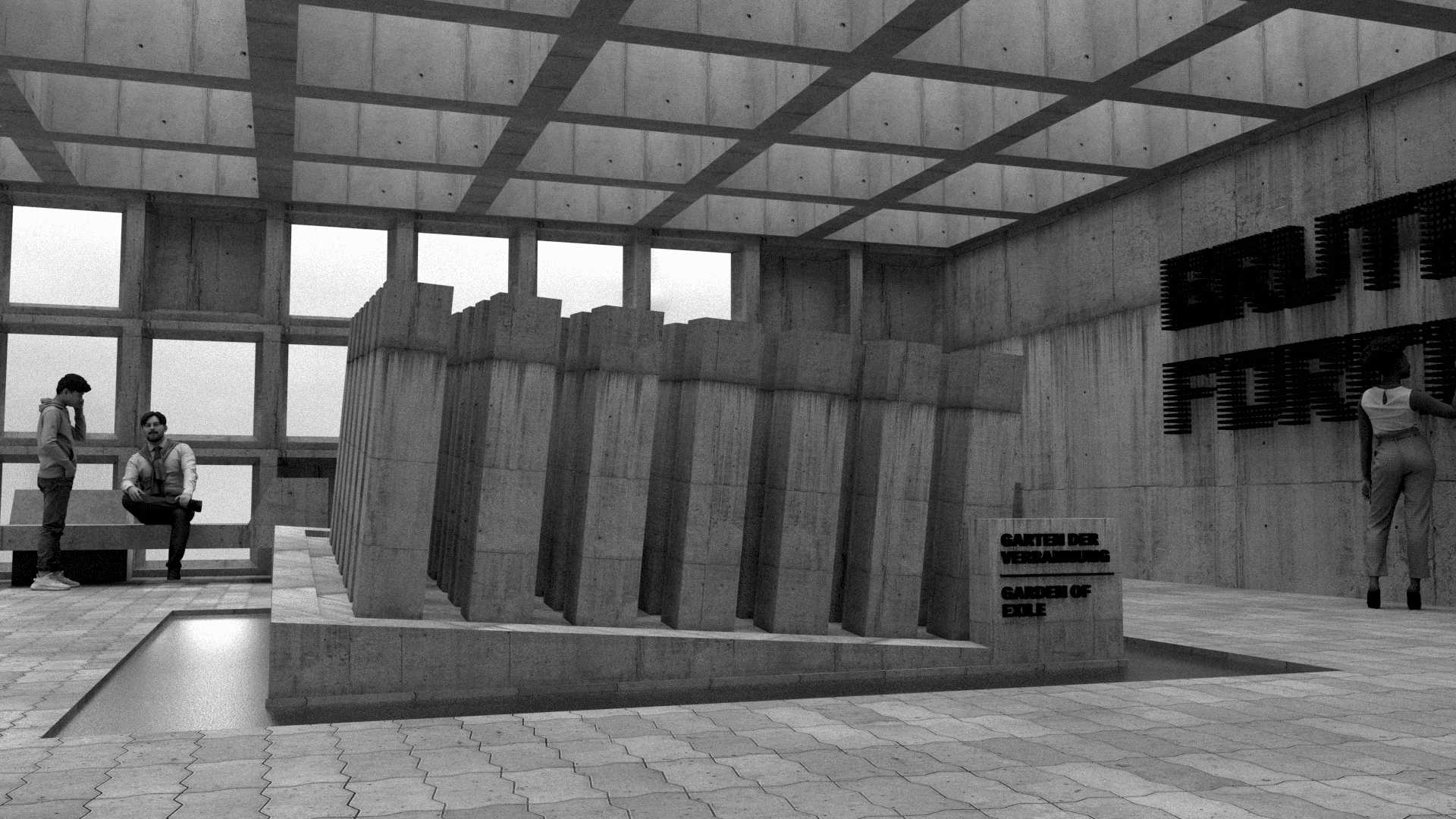
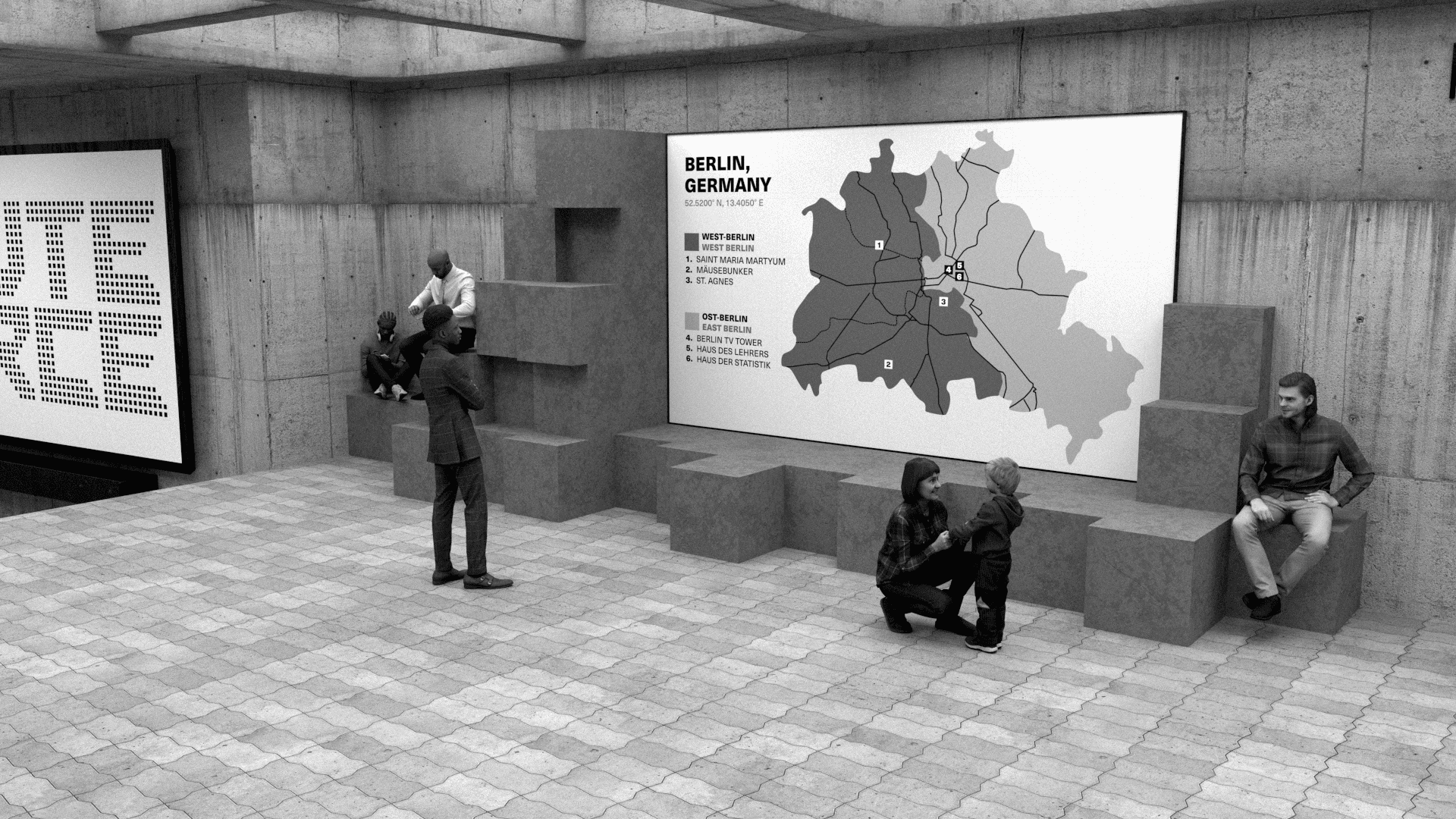
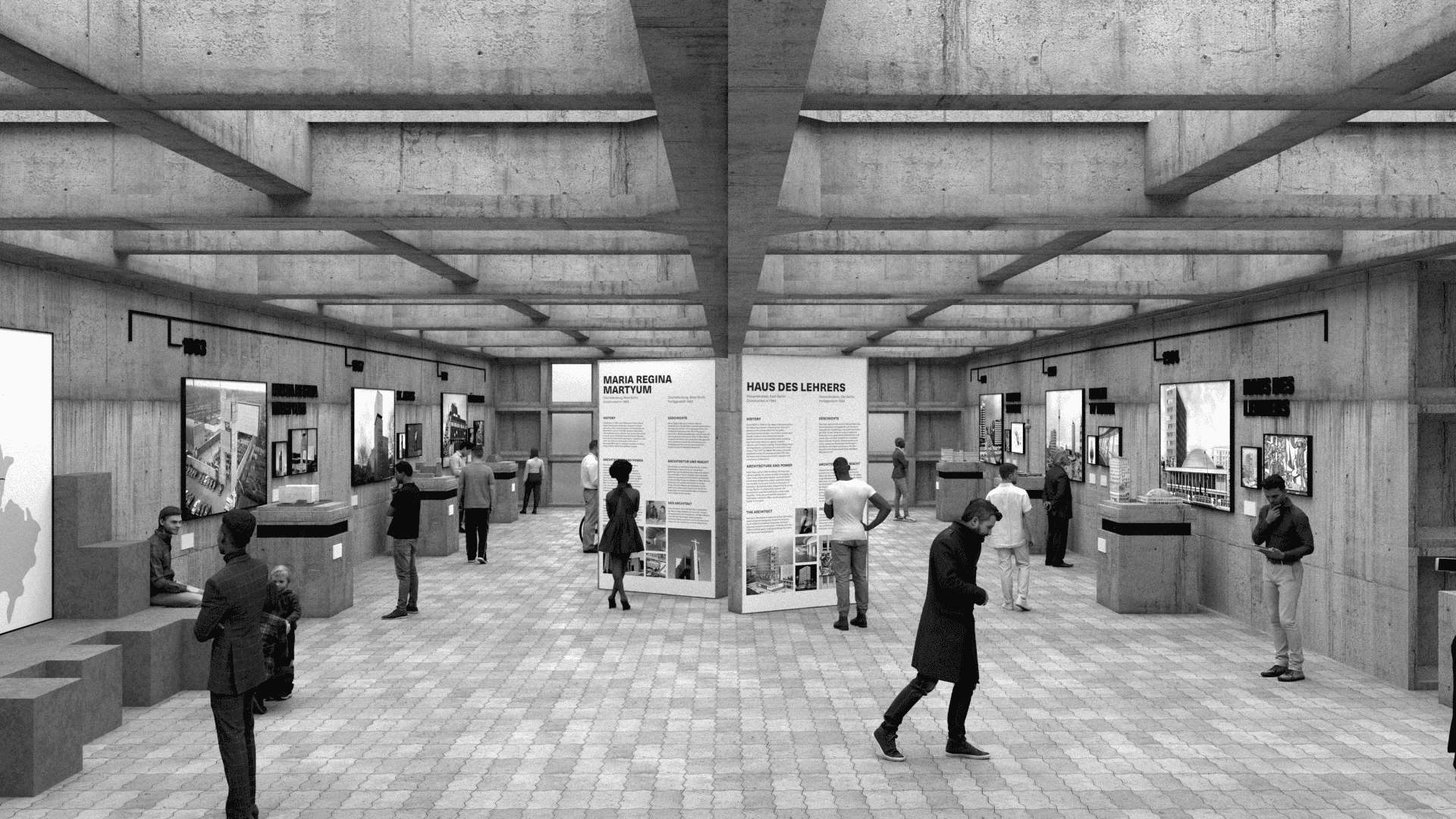
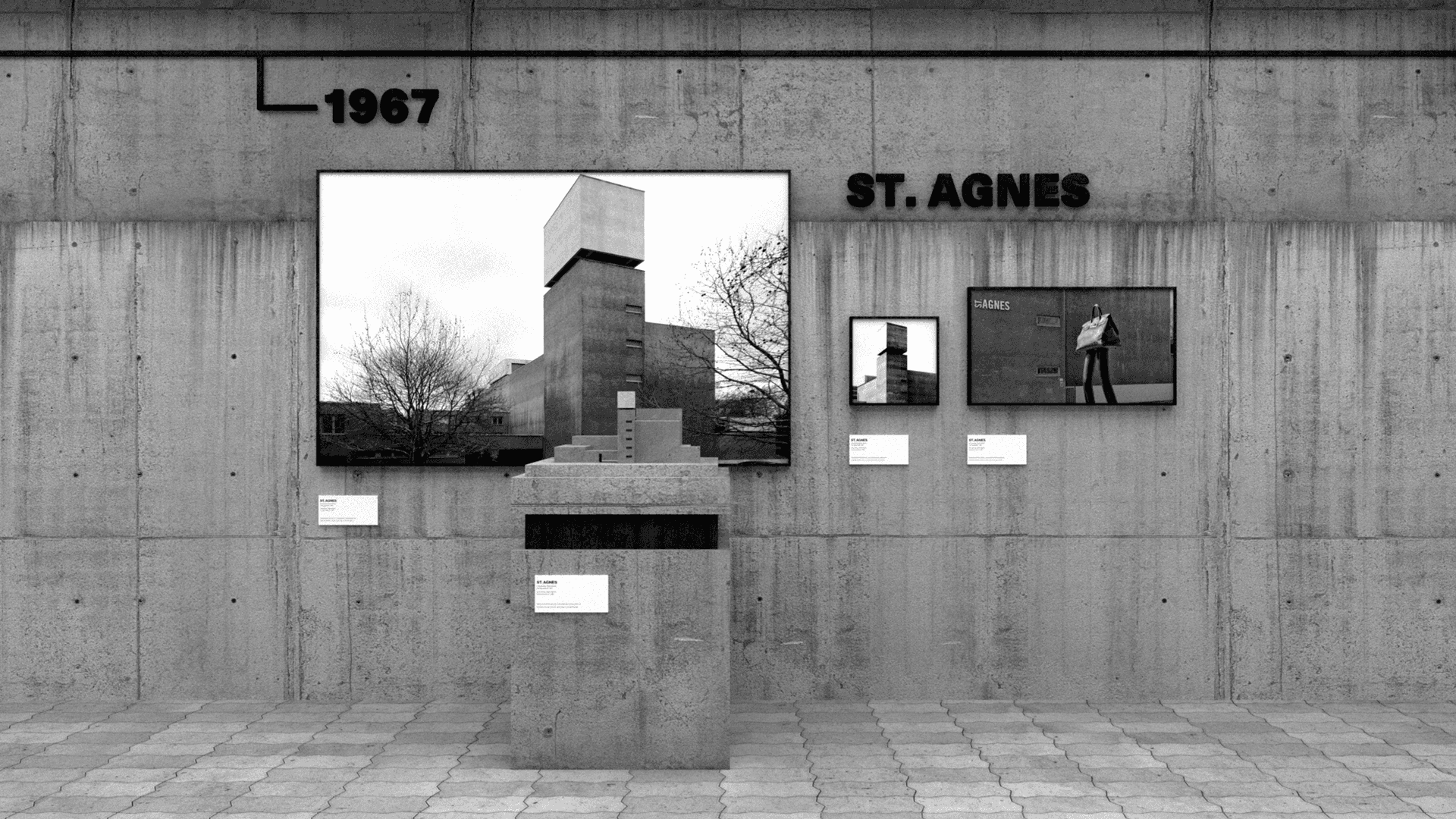
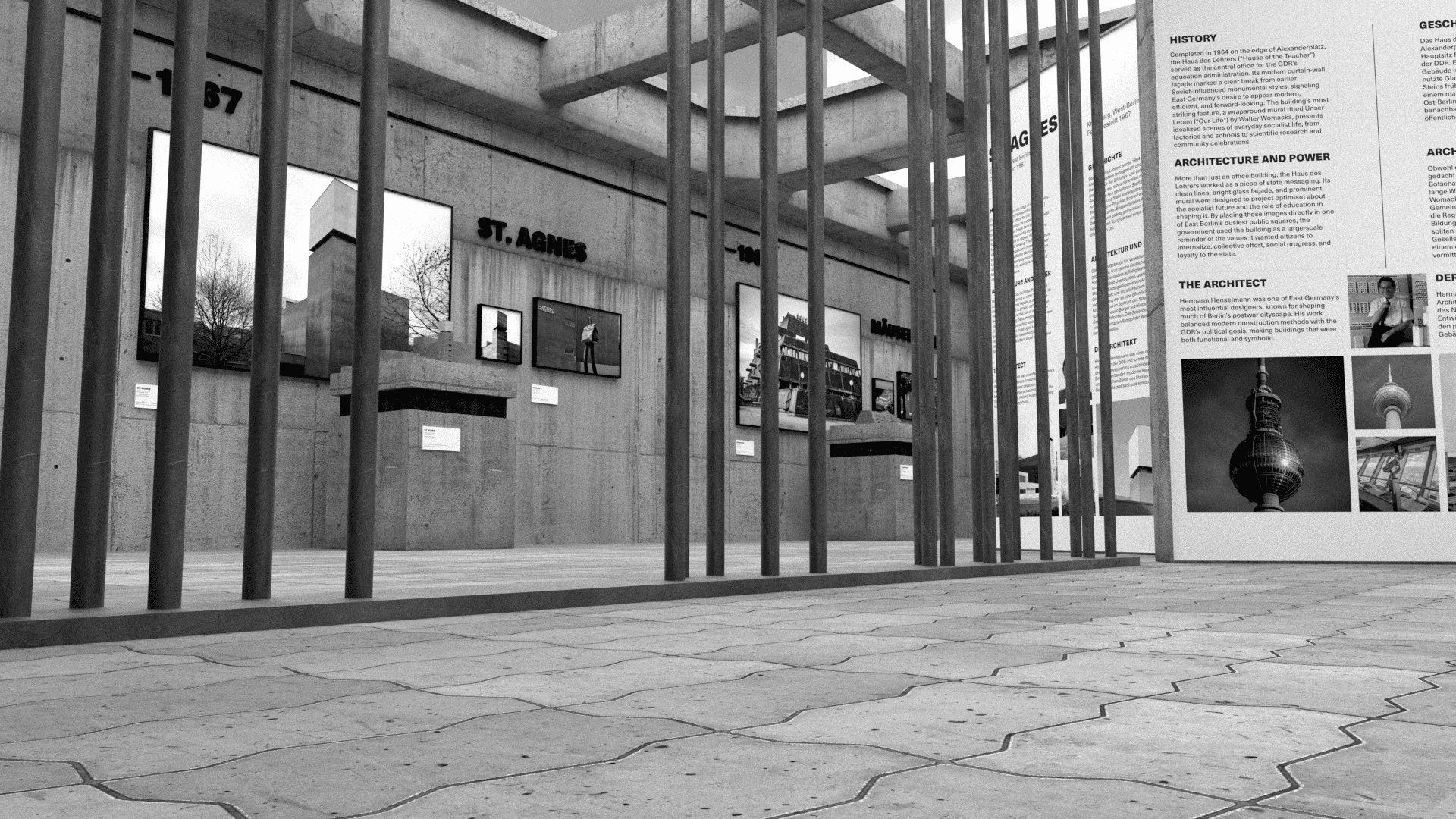
I've never done anything like this in terms of architectural 3D modeling, and it was a lot of fun to make something in an architectural style I'm fascinated with. Our plan was to have a entryway with a large structure to guide the viewer to want to come in. When they enter and turn left, they see the rest of the exhibit and decide to look further. The meat of the exhibit runs on a central axis with East and West Berlin as parallel zones on either side. We wanted to highlight key architecture that was influential when it was constructed. A recreation of what's left of the Berlin wall as a divider that still allows for guests to pass through.
I've never done anything like this in terms of architectural 3D modeling, and it was a lot of fun to make something in an architectural style I'm fascinated with. Our plan was to have a entryway with a large structure to guide the viewer to want to come in. When they enter and turn left, they see the rest of the exhibit and decide to look further. The meat of the exhibit runs on a central axis with East and West Berlin as parallel zones on either side. We wanted to highlight key architecture that was influential when it was constructed. A recreation of what's left of the Berlin wall as a divider that still allows for guests to pass through.
I've never done anything like this in terms of architectural 3D modeling, and it was a lot of fun to make something in an architectural style I'm fascinated with. Our plan was to have a entryway with a large structure to guide the viewer to want to come in. When they enter and turn left, they see the rest of the exhibit and decide to look further. The meat of the exhibit runs on a central axis with East and West Berlin as parallel zones on either side. We wanted to highlight key architecture that was influential when it was constructed. A recreation of what's left of the Berlin wall as a divider that still allows for guests to pass through.